
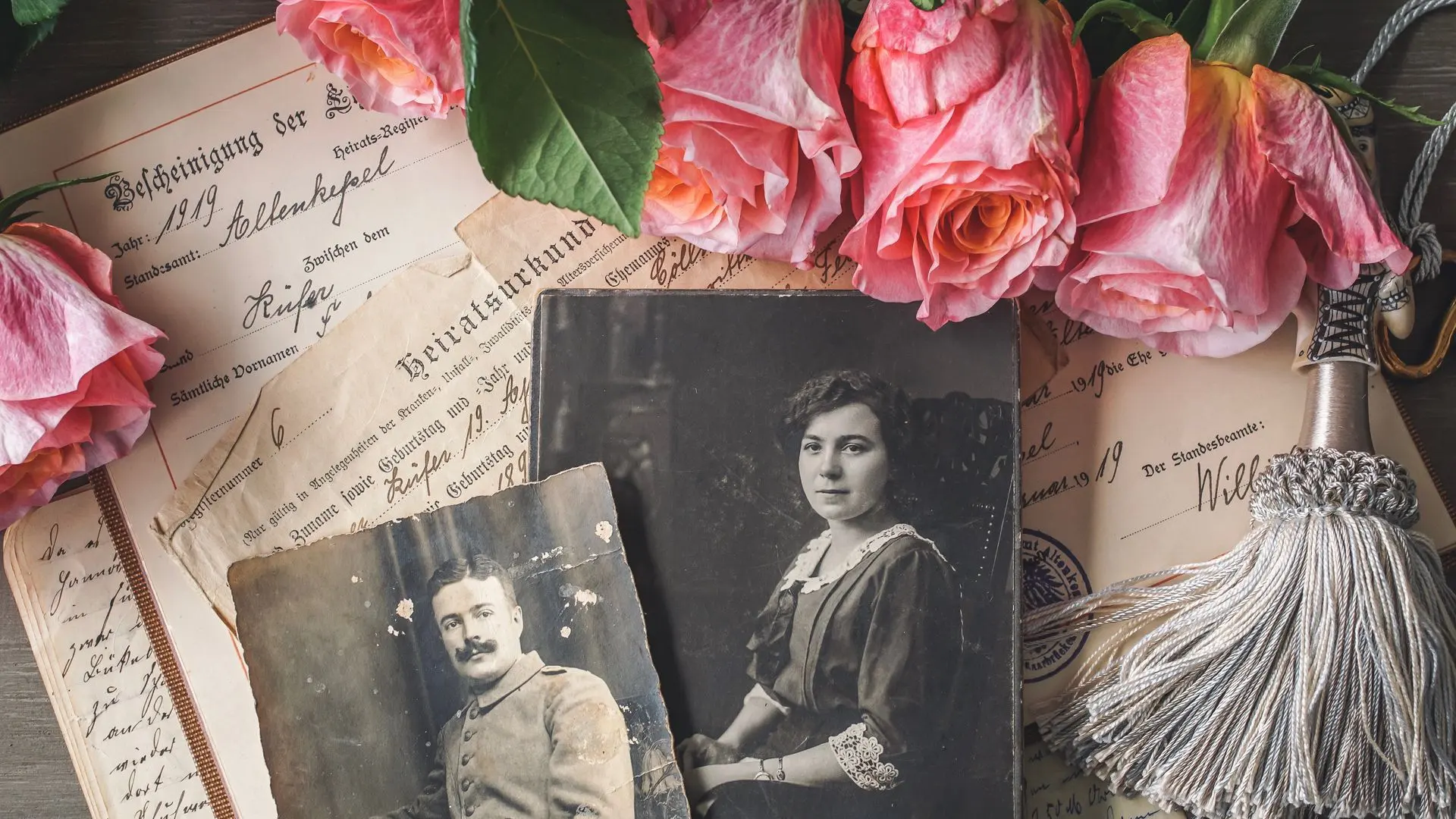
Slovenian citizenship by descent is not one single procedure. A person with Slovenian ancestry may already have a claim through a parent, may be eligible to register citizenship by a certain age, or may need to apply through a naturalisation route for emigrants and their descendants.
The decisive facts are who in the family was a Slovenian citizen, when they held citizenship, where each generation was born and how many generations separate the applicant from the Slovenian ancestor.
A family tree proves relationship. It does not by itself prove the ancestor’s Slovenian citizenship or select the correct legal basis for the applicant.
What does “citizenship by descent” mean in Slovenia?
People use the phrase to describe several legally different situations:
- citizenship by origin because a parent was a Slovenian citizen;
- registration or declaration for a person born abroad to one Slovenian parent;
- naturalisation for a Slovenian emigrant or a descendant in the direct line; and
- extraordinary naturalisation on national grounds for certain emigrants and descendants with a demonstrated connection to Slovenia.
The official GOV.SI citizenship overview distinguishes acquisition by origin from acquisition by naturalisation. That distinction affects age limits, residence, language, release from another citizenship and the evidence required.
Route 1: a parent was Slovenian when the child was born
This is the most direct ancestry situation. If both parents were Slovenian citizens when the child was born, citizenship by origin generally follows regardless of the place of birth.
If a child was born abroad and only one parent was a Slovenian citizen, the parents may apply to register the child before age 18. If registration did not happen during childhood, an adult born abroad to one Slovenian parent may generally make a declaration by age 36. These rules are set out in the official consolidated text of the Citizenship of the Republic of Slovenia Act.
Do not assume that a parent’s Slovenian birthplace is enough. The assessment needs evidence of the parent’s citizenship at the legally relevant time.
Route 2: an emigrant or descendant applies by naturalisation
Official guidance recognises a naturalisation route for a Slovenian emigrant or a descendant in the direct line up to the fourth degree who has actually lived in Slovenia for a continuous period of at least one year before applying, subject to the other statutory conditions.
This route matters where the applicant is outside the direct parent-based registration rules but has relocated to Slovenia and can prove the qualifying family line.
“Direct line” means the line from the applicant through parents, grandparents and earlier direct ancestors. A collateral relationship, such as a great-uncle or cousin, does not create the same lineage.
Route 3: extraordinary naturalisation on national grounds
Certain Slovenian emigrants and descendants in the direct line up to the second degree may seek extraordinary naturalisation based on national grounds. Under the government’s guidance, qualifying applicants may be exempt from specific requirements such as continuous residence in Slovenia, guaranteed means of subsistence and certain tax-liability conditions.
This is not automatic citizenship for every grandchild. The applicant must demonstrate a personal active connection with Slovenia over several years. The official overview refers to at least five years of active participation in Slovenian associations abroad or other Slovenian emigrant, expatriate or minority organisations, supported by recommendations and evidence from those organisations.
An official Article 13 application checklist illustrates the evidence commonly requested for ancestry and active involvement, including civil-status records for ancestors and proof of participation in Slovenian organisations.
How do you identify the correct route?
Start with a generation-by-generation chronology rather than a pile of certificates.
| Question | Why it matters |
|---|---|
| Was a parent a Slovenian citizen at your birth? | May point to citizenship by origin or registration rather than naturalisation |
| Were you born abroad to one Slovenian parent? | Age 18 and age 36 can be legally important |
| Which ancestor left Slovenia, and when? | Helps determine emigrant status and the relevant historical records |
| How many generations are between you and that ancestor? | Different naturalisation provisions use different generational limits |
| Have you lived in Slovenia? | Some routes require actual continuous residence before application |
| Can you prove an active connection with Slovenia? | Central to relevant extraordinary-naturalisation cases |
Our citizenship-by-descent assessment is designed to answer these route questions before the document collection becomes expensive.
Which documents usually matter?
The file must connect every generation without unexplained gaps or conflicting identities.
Civil-status records
Birth, marriage, adoption and name-change certificates establish the direct family line. Records may need to be newly issued, legalised and translated by a certified court interpreter. Slovenia’s eUprava portal also explains what appears in an official extract from the central register of births.
Evidence of the ancestor’s citizenship or Slovenian status
A birth record from territory that is now Slovenia does not always prove Slovenian citizenship. Citizenship registers, historical domicile records, passports, certificates and archival material may be required, especially where the ancestor was born before modern Slovenia existed.
Evidence of emigration and identity continuity
Passenger records, foreign naturalisation files, marriage documents and name-change evidence can help explain how the ancestor in Slovenia is the same person recorded abroad under a different spelling.
Evidence of an active connection
Where the chosen route requires it, collect dated membership records, participation confirmations, recommendations, Slovenian-language activity and evidence of sustained involvement. A recent symbolic membership is not the same as a multi-year active relationship.
Where is the application filed?
Depending on the route and applicant’s circumstances, applications or declarations may be submitted through a Slovenian diplomatic or consular mission abroad, an administrative unit in Slovenia or the competent ministry.
The filing location does not change the need to select the correct legal basis. Consular staff can receive an application, but the applicant remains responsible for presenting the facts and evidence that satisfy the chosen route.
Can you keep your current citizenship?
Slovenian law treats this differently across routes. The government states that a beneficiary of extraordinary naturalisation may retain their original nationality. Other naturalisation situations may involve different release requirements or exceptions.
Dual citizenship also depends on the law of the other country. Even if Slovenia does not require renunciation in a particular case, the applicant’s current country may impose its own consequences. Review both legal systems before taking an irreversible step.
Common reasons ancestry cases stall
- The wrong route is used. A parent-based registration case is prepared as naturalisation, or a distant-descendant case assumes automatic entitlement.
- Birthplace is treated as citizenship. Historical borders and citizenship systems make this especially risky.
- The family chain has a missing link. One marriage, adoption or name change is unsupported.
- Spellings differ across countries. The file does not explain translated, anglicised or changed names.
- Active connection is asserted but not evidenced. General interest in Slovenia is not the same as documented multi-year involvement.
- Documents are translated before legalisation. The applicant has to repeat work because the certification chain is incomplete.
What should you do first?
Create a one-page family chronology listing every person in the direct line, their dates and places of birth, citizenships, marriages, name changes and emigration dates. Mark which facts are supported by official records and which still rely on family memory.
That chronology allows a proper route assessment and a focused archive search. It also prevents the most common waste: ordering dozens of documents before knowing which legal rule the application must satisfy.
For broader support, see our Slovenian and EU citizenship service or request a case-specific initial review.
This article provides general information and is not a substitute for legal advice on your individual citizenship history.